You walk into your living room and pause.
It’s clean. It’s styled. But it doesn’t feel like you.
That couch pillow is too stiff. That shelf arrangement looks like a magazine shot (not) like real life. You keep rearranging, hoping it’ll click.
But it won’t (because) most home decor advice treats your home like a photoshoot, not a place you live.
I’ve curated real homes for over a decade. Not staged sets. Not Pinterest boards.
Actual spaces where people eat cereal on the sofa, lose keys in the couch, and raise kids (or cats) who knock things over.
Trends fade. Aesthetic overload burns out fast. And “quick decor fixes” usually make things worse.
This isn’t about matching everything or chasing what’s viral this month.
It’s about choosing pieces that last. Styling them so they work with your routine (not) against it.
Ththomedec Home Decoration by Thehometrotter is how I name that approach. Intentional. Human.
Unhurried.
You’ll get clear, practical steps. Not theory (to) build a home that feels grounded, warm, and unmistakably yours.
No fluff. No trends. Just what actually works.
Why ‘More Decor’ Isn’t the Answer (and What to Do Instead)
I stopped buying decor when I realized I was choosing against my own space. Not for it.
Scrolling through endless throw pillows? That’s not inspiration. It’s decision fatigue masquerading as self-expression.
(And yes, I’ve stared at three nearly identical oatmeal linen pillows for 17 minutes.)
Three identical pillows don’t add warmth. They add noise. They fracture the eye instead of guiding it.
That’s why I use the Anchor + Accent principle now.
One intentional foundational piece (a) rug with real texture, a mirror with patina, a lamp that casts warm light (and) only one or two accents that respond to it. Not match. Respond.
Before adding anything new, I ask: Does this serve light, function, texture, or memory?
If not. I pause. If I can’t answer.
Out it goes.
Try this right now: Name one decor item in your home you’ve never touched or used.
Why is it still there?
It’s probably not waiting for the “right moment.” It’s waiting for permission to leave.
Ththomedec helped me see that clutter isn’t visual. It’s cognitive. Ththomedec Home Decoration by Thehometrotter isn’t about more.
It’s about fewer things, chosen harder.
Texture, Scale, and the Space Between
I used to think decoration was about color and furniture.
Then I moved into a white room with smooth walls and hated it. Felt like a dentist’s office.
Texture is negative space’s best friend. Not just visual (tactile.) Nubby linen. Raw wood grain.
A ceramic mug that’s rough on one side. That’s where depth lives when color isn’t doing the work.
You know that tiny vase you bought online? The one sitting on your 72-inch console like it’s waiting for directions? Yeah.
It’s lost. Use the one-third rule: pick an object at least one-third the length of the surface beneath it. Or better (group) three things at different heights.
Empty space isn’t lazy. It’s active. A cleared shelf isn’t “minimalist.” It’s breathing room.
It makes the single book you left there matter.
Swap this week:
- Synthetic throw → cotton-linen blend
- Glossy frame → matte black metal
Small space? Go vertical. Hang a woven wall piece.
Stack books spine-out (mix) paperbacks, hardcovers, textures. No footprint. All dimension.
Ththomedec Home Decoration by Thehometrotter nails this balance. Not by filling, but by choosing.
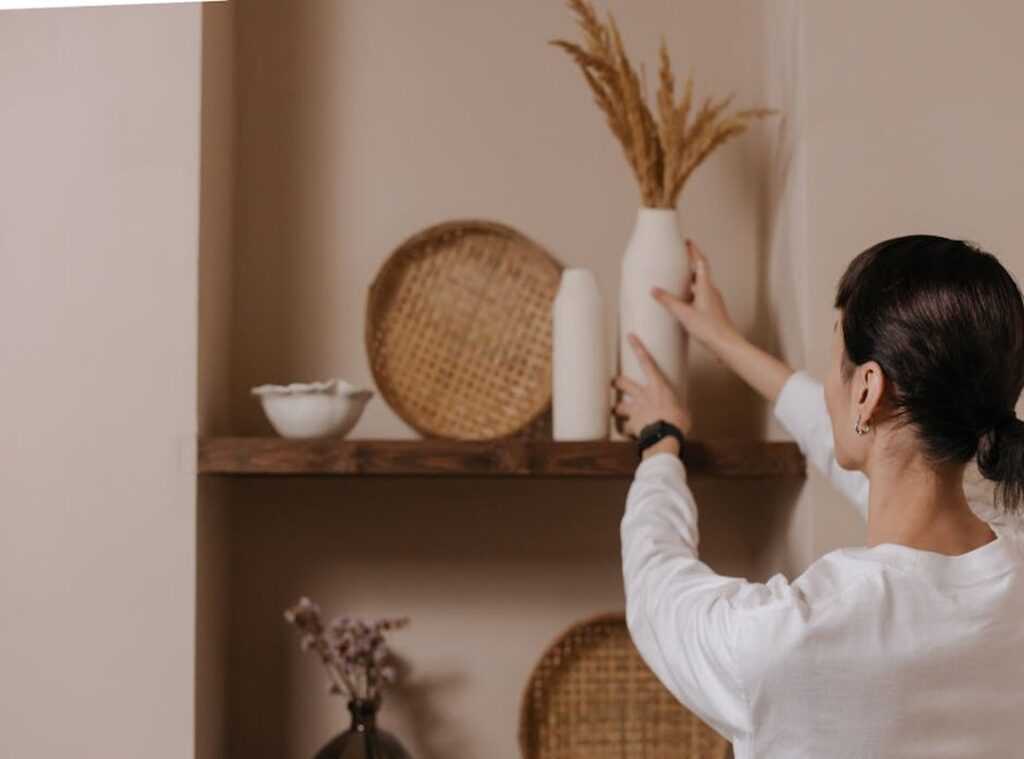
That shelf you keep rearranging? Clear it. Then put back one thing you actually touch.
Try it.
Style With Meaning (Not) Just Matching
I used to match everything. Walls to pillows. Pillows to vases.
It looked tidy. It felt dead.
Meaningful styling means choosing objects you’ve held, remembered, or reached for (not) just ones that share a color.
That chipped mug? I keep it on the counter. Not because it matches the kettle (it doesn’t).
Because it’s the one I grab every morning without thinking. That’s meaning.
The Three-Touch Rule changed everything for me. If I haven’t held, moved, or interacted with something in 30 days. It’s clutter.
Not decor. Not memory. Just stuff.
Try this: fill your bookshelf with 70% books and 30% touch objects. A smooth river stone. A spoon my grandfather carved.
A leaf pressed in glass. No rules. Just weight.
Texture. History.
I stopped grouping souvenirs by country. Now I group them by material (stone) from Iceland, paper from Kyoto, brass from Oaxaca. They talk to each other differently that way.
That faded textile? Hang it where light hits it at 4 p.m. Watch how the wear catches the sun.
It’s not imperfect. It’s used.
You’re not decorating a showroom. You’re curating your rhythm.
Which Houseplants Should I Buy Ththomedec is another kind of touch test. Does the plant invite care? Does it fit your light, your schedule, your hand?
Ththomedec Home Decoration by Thehometrotter gets this right. It’s not about matching. It’s about showing up.
My Decor Toolkit: 7 Things That Never Go Out of Style
I started with a woven basket. Just one. From the farmers’ market.
Still using it.
That’s how my core decor kit began.
A neutral woven basket. A solid-color ceramic tray. An adjustable floor lamp.
No sets. No matching everything. Just five to seven pieces that work with me (not) against me.
An organic cotton table runner. A compact plant stand.
They’re not trendy. They’re usable. And they adapt.
That same ceramic tray? Held my keys by the door in 2020. Served brie and fig jam at a dinner party last month.
Now it holds toner and face oil on my bathroom counter.
You don’t replace these when you repaint or move. You reassign them.
Here’s what I require for every kit item:
It must be repairable. Made with natural materials. And.
If it’s washable (fit) in a standard dishwasher or washing machine.
I’ve seen cheap ceramics crack after two handwashes. Skip them. Tap the side (if) it rings, it’s likely well-fired clay.
Secondhand works great. Hit up local thrift stores, Facebook Marketplace, or estate sales. Check wood grain continuity.
Feel ceramic thickness. If it’s thin and cold, walk away.
Ththomedec Home Decoration by Thehometrotter gets this right: function first, style second.
I bought my floor lamp used for $18. It’s lasted eight years. Three apartments.
Zero regrets.
Start small. Pick one piece. Use it until it feels obvious.
When to Break the Rules (and Why It Matters)
I stopped following interior design rules the day my beige sofa got a single tangerine pillow.
That one exception didn’t ruin the room. It made it mine.
“All frames must match”. No. I mixed brass, black, and raw wood on my gallery wall.
The contrast popped. It told a story instead of whispering conformity.
“No patterns in small rooms”. Wrong. A bold botanical print on a tiny reading nook chair?
That chair became the anchor. You walk in and see it. Not the square footage.
“Everything must be symmetrical” (boring.) I placed a tall fiddle-leaf fig behind my sofa last year. Not beside it. Not in a corner.
Behind it. Suddenly the space had depth. Privacy.
Flow. Like the plant was holding the room together.
Here’s what actually works: the Rule of One Exception. Break one visual expectation per zone. One color.
One texture. One placement that surprises. Not three.
Not five. Just one. That’s how you get calm (not) chaos.
If it feels grounded and joyful in your space, it belongs. Even if every blog says it “shouldn’t.”
That’s why I trust Ththomedec Home Decoration by Thehometrotter (they) get this instinctive balance.
You’ll find real examples like these at Ththomedec.
Start Styling With Confidence (Today)
I’ve said it before and I’ll say it again: your home isn’t a showroom. It’s where you breathe, drop your keys, spill coffee, and feel things.
Perfection? Not required. Presence is.
Patience is. You showing up. Not as a decorator, but as a person (is) the only thing that matters.
You already know the Anchor + Accent principle. You remember the Three-Touch Rule. No cost.
No pressure. Just two things on one surface.
Pick one spot right now (a) nightstand, entry table, or kitchen counter. Clear it. Then place just two items that you actually touch and truly like.
That’s it. That’s where confidence starts.
Ththomedec Home Decoration by Thehometrotter proves it every day.
Your home doesn’t need more decor.
It needs more of you. And that starts with what you keep, not what you buy.